
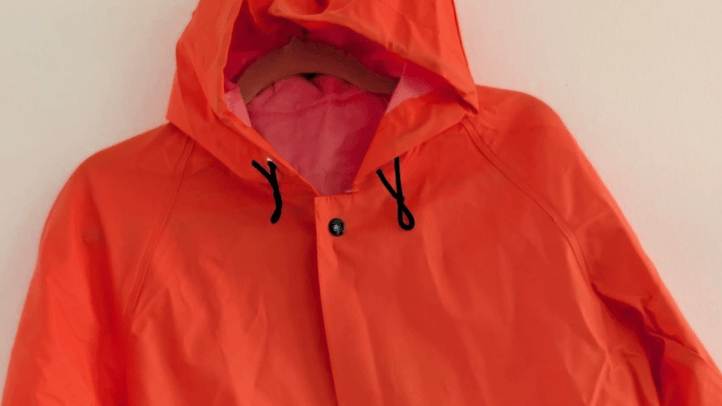
There is a saying in Sweden: “det finns inget dåligt väder, bara dåliga kläder” which, effectively, translates to “there is no such thing as bad weather, only bad clothing”. Sweden’s heritage apparel brands, like Abeko, are the perfect manifestation of this mantra.
Indeed, there is something quintessentially Scandinavian about a company whose fortunes were built on the simple proposition that it rains, people need to go outdoors, and their clothes ought to keep them dry. Yet the story of Abeko, the Swedish rainwear manufacturer, is about considerably more than waterproof jackets. It is a tale of post-war ingenuity, family entrepreneurship, colourful children’s clothing, the changing economics of European manufacturing and a distinctly Nordic approach to dressing for the weather.
Founded in 1948 in the Swedish province of Värmland (specifically, just outside of Åräng in Western Värmland on the shores of lake Västra Silen and close to the Norwegian border), Abeko grew from a small workwear operation into a major rainwear producer, becoming particularly well known for its children’s waterproof clothing. Its story also offers an intriguing subject for fashion historians: the point at which an essentially practical garment becomes part of everyday style.
1. From a village sewing operation to a Swedish clothing business
The story begins in the immediate aftermath of the Second World War, when clothing and materials could be difficult to obtain and practical garments were in demand.
According to a 2011 account in Swedish trade magazine Sportfack, the business that became Abeko began in 1948 in Järnskog, a small locality north of Årjäng in western Värmland. A local shopkeeper, Sven Myrvold, had bought sewing machines to produce sturdy workwear for his customers, initially using traditional materials such as woollen cloth. His aim was straightforward: to save local people the journey to the larger town of Arvika to buy their clothes.
Karl Nilsson, a local retailer and the grandfather of Abeko’s later managing brothers Johan and Anders Västsäter, became involved as a partner. Within a few years, Nilsson had bought out the original participants and expanded the business into waterproof clothing.
Sportfack
The move into rainwear made excellent commercial sense. Forestry was an important industry in Värmland, and those working outdoors needed clothing that could withstand persistent rain, mud and rough conditions. Abeko’s earliest identity was therefore rooted in utility rather than fashion: clothes designed to work in the real world.
This practical beginning is an important part of the brand’s appeal today. Long before technical outdoor clothing became a lifestyle category in its own right, manufacturers such as Abeko were addressing the fundamental problem of how to stay comfortable and dry in the open air.
2. The 1960s: rainwear moves into everyday life

During the 1960s, Abeko expanded beyond workwear into leisure rainwear, followed by children’s clothing. This was a significant development: waterproof garments were no longer intended exclusively for workers who had to brave the elements. They were increasingly part of ordinary family life.
Sportfack
Children’s rainwear is an especially interesting subject from a fashion perspective. It occupies a space between clothing and equipment. A good raincoat must be functional, but colour, cut, ease of movement and the appeal of the garment to children and parents all matter.
In the wider context of post-war European fashion, this was an era in which everyday clothing was becoming more varied, practical and accessible. Outdoor leisure, family holidays and children’s play all created opportunities for manufacturers to develop garments that could be worn beyond the workplace.
Abeko’s subsequent reputation for children’s rainwear suggests that it found a successful niche in this market. A Danish industry profile published in 2011 described the company as particularly well known for its children’s waterproof clothing and reported that it produced around a million rainwear items annually.
Grønteknik
For a fashion blog, this is where Abeko becomes more than a footnote in industrial history. Children’s rainwear is an overlooked part of twentieth-century dress, yet it reflects changing ideas about childhood, leisure and the relationship between clothing and the outdoors.
3. A family business with its roots firmly in Värmland
One of the most appealing aspects of Abeko’s history is the importance it attached to its origins.
The business remained in the Årjäng area as it expanded, with production initially concentrated in Sweden. But the economics of textile manufacturing were changing. By the late 1960s, rising production costs were putting pressure on the Swedish clothing industry, prompting Abeko to look abroad.
The company established a specialist factory for children’s clothing in Nykarleby, Finland. Later, during the 1990s, it expanded its manufacturing operations into Poland. These developments allowed Abeko to maintain its focus on durable clothing while adapting to the realities of European manufacturing.
Sportfack
+1
The company’s family identity remained important, too. By the time Sportfack visited in 2011, brothers Johan and Anders Västsäter were running the business, continuing a tradition inherited from their grandfather. They were keen to retain their roots in Årjäng rather than relocate to a major commercial centre.
There is a certain charm in this history. Abeko was not a fashion house built around a celebrated designer or a glamorous capital city. It was a regional manufacturer whose expertise grew from understanding the weather, the needs of its customers and the value of a well-made garment.
4. Abeko and the rise of colourful Scandinavian rainwear


8
For a fashion historian, the most visually interesting chapter is arguably Abeko’s expansion into children’s rainwear and leisure clothing.
Rainwear presents a particular design challenge. Unlike a tailored wool coat or a silk dress, its primary purpose is protection. Yet its appearance still communicates something about the wearer, the era and the culture in which it was made.
The broader Scandinavian tradition of outdoor clothing has often favoured practical construction, straightforward shapes and colours that are easy to see in poor weather. Children’s waterproofs are an especially vivid expression of this approach. Bright yellows, reds, blues and contrasting panels can make a functional garment visually distinctive without sacrificing its purpose.
Abeko’s 2008 workwear catalogue described its children’s collection as colourful and comfortable, designed around children’s movement and their desire to play. The same catalogue divided the business into workwear, outdoor clothing and children’s clothing, illustrating just how far the original enterprise had developed.
Yumpu
It is worth distinguishing between Abeko’s documented products and the wider Scandinavian aesthetic: without a substantial archive of dated Abeko advertising, it would be misleading to attribute every colourful retro rain suit to the company.
Nevertheless, vintage Abeko garments are worth investigating in their own right. They offer a glimpse into a category of clothing that is often overlooked by fashion collectors, despite its strong associations with childhood memories, outdoor play and Nordic everyday life.
5. When the rain became a business advantage
Abeko’s fortunes were closely tied to the weather, as Swedish public broadcaster Sveriges Radio reported in August 2004.
That summer, heavy rainfall led to a 40 per cent increase in the company’s orders during July. The manufacturer had anticipated that demand could rise sharply when wet weather arrived and had maintained substantial stocks to meet it.
Sveriges Radio
The episode is a wonderful detail for your blog. In fashion, weather is often treated as a problem to be worked around: a wet summer can spoil the market for lightweight dresses, while an unexpectedly warm winter can leave retailers with unwanted coats.
For a rainwear manufacturer, however, a rainy summer can be a gift.
It also demonstrates that Abeko was not simply a small, local producer. By the 2000s, it had become a substantial business with international operations and a significant presence in the European rainwear market. A 2007 Sveriges Radio report described it as one of Europe’s largest rainwear manufacturers, with approximately 200 employees across Sweden, Finland, Norway, Denmark and Poland, alongside outsourced production in Asia.
Sveriges Radio
6. The H&M connection and the pressures of global fashion
Abeko’s history also reflects the difficulties faced by European clothing manufacturers as the market became increasingly international.
In an interview published by Sportfack in 2011, the company discussed the challenges posed by cheaper imports of children’s clothing from Asia and the changing structure of Swedish retail.
One particularly significant development was the loss of H&M as a customer. According to the article, Abeko had previously manufactured a substantial proportion of the retailer’s own-brand rainwear, with H&M accounting for almost a quarter of Abeko’s turnover around the turn of the millennium. Losing that business was a major blow.
Sportfack
This is an interesting reminder that a garment’s history involves more than its design. Behind a seemingly simple children’s raincoat lies a network of factories, suppliers, retailers and commercial relationships.
Abeko’s management also faced the difficulty of competing in a market where clothing ranges were changing more frequently. Historically, parents might buy a durable rainwear set intended to last for several years and be passed down to younger siblings. As the market shifted towards more frequent seasonal collections, manufacturers faced increasing pressure to refresh their designs.
Abeko’s challenge was to preserve its reputation for quality while adapting to a faster-moving clothing industry.
7. The end of an era in Årjäng

In January 2014, the Danish rainwear company Ocean Textile Group acquired Abeko. The purchase included Abeko’s Polish manufacturing operation, and the brand name was retained.
Habit
A few months later, the story took a more poignant turn. In April 2014, Sveriges Radio reported that the new owners had decided to close Abeko’s operation in Årjäng and transfer the business to Denmark. The move brought an end to the company’s long association with the Värmland town where it had begun in 1948.
Sveriges Radio
It was a significant moment for the local community, but not the end of the brand itself.
Abeko continued under Ocean’s ownership, combining its heritage in Swedish rainwear with the Danish company’s expertise in protective clothing. The combined brand is now marketed as Ocean-Abeko, with products spanning professional rainwear, workwear and outdoor use.
nordic-rainwear.com
The distinction matters for collectors and vintage enthusiasts: Abeko as a Swedish family business with its own manufacturing base is a different historical chapter from the contemporary Ocean-Abeko product range.
Vintage Abeko adverts and archival material
This is the part of the research where a little caution is worthwhile. I found useful historical material, including a contemporary trade-magazine article with an image captioned “Abekomode från förr” (“Abeko fashion from the past”), and a 2008 catalogue. I could not verify a comprehensive collection of original, dated vintage Abeko advertisements.
Here are the most promising places to begin.
1. Sportfack: “Abeko besöker” — 2011
A particularly useful historical source
The article includes a photograph captioned “Abekomode från förr”, alongside an extensive account of the company’s origins, family ownership, manufacturing history and children’s clothing. It is the best starting point I found for tracing older Abeko designs.
Read the article and explore its photographs
Sportfack

2. Abeko Work Collection catalogue — 2008
Original company catalogue, rather than an advertising campaign
This digitised catalogue includes the company’s own descriptions of its workwear, outdoor and children’s ranges. It is a useful primary source for understanding how Abeko presented itself commercially during its later Swedish period.
Browse the digitised catalogue
Ark1
+1

3. Tradera: vintage Abeko rainwear
A collector’s lead
Swedish second-hand marketplace Tradera has carried an Abeko two-piece waterproof suit in blue and orange, bearing a Telia logo. It is a useful example of how vintage garments can survive even when original advertising is difficult to locate.
Tradera

4. Ocean Rainwear catalogue — 2015/16
Useful for the post-acquisition period
This catalogue introduces Abeko as part of Ocean Textile Group following the 2014 acquisition. It helps establish the transition from the independent Swedish business to the combined brand.
abcdocz.com
Where I would look next for original advertisements
For genuinely vintage printed adverts rather than modern product photographs, I would concentrate on Swedish-language archives and magazines:
- DigitaltMuseum — search for Abeko. Worth checking for photographs, garments and archival material held by Swedish museums.
- Kungliga biblioteket (the National Library of Sweden) — official website. Its digitised newspapers and periodicals may contain old retail advertisements, although access to some material is restricted.
- Swedish newspaper archives and local papers around Årjäng and Värmland — local retailers may have advertised Abeko rainwear even when the manufacturer did not run a national campaign.
- Tradera — search for
Abeko annons,Abeko katalog,Abeko regnkläderandAbekomode. Old catalogues, packaging and advertising ephemera can surface through collectors.
A useful Swedish search phrase is “Abeko annons regnkläder” (Abeko rainwear advertisement). For older material, try adding 1960-tal, 1970-tal or 1980-tal.
One important editorial note: the images above are visual research leads, not verified reproductions of historic Abeko advertisements. If you use a vintage photograph in a published blog, check the original source, date and image rights before publication.
A suggested introduction for your fashion blog
If you would like to turn the research into a more magazine-style feature, this is a possible opening.
Abeko: The Swedish Art of Dressing for Rain
In fashion, some of the most interesting stories belong not to the great couture houses of Paris or Milan, but to the manufacturers of everyday clothes. Abeko, the Swedish rainwear company founded in 1948, is one such story.
Born in the forests of Värmland in the difficult years after the Second World War, the company began by making practical workwear for people who needed dependable protection from the elements. Over the decades, it expanded into leisure clothing and children’s waterproofs, becoming a familiar name in Scandinavian rainwear.
Its history captures something distinctly Nordic: the belief that bad weather is no excuse to stay indoors, provided one is dressed for it. Behind the colourful rain suits and hard-wearing waterproofs lay a family business that grew from a modest local enterprise into an international manufacturer, adapting to changing fashions and the increasingly global clothing industry.
Abeko’s story is also a reminder that fashion history is not solely about glamour. Sometimes it is about a well-made raincoat, a wet afternoon and the quiet ingenuity of the people who make it possible to enjoy the outdoors regardless of the forecast.
Suggested sources for your article
For the strongest historical foundation, I would prioritise these three sources:
- Sportfack — Abeko’s company history and family business, 2011. The most detailed account of the early years and expansion.
- Sveriges Radio — the effect of a rainy summer on Abeko, 2004. A contemporary report illustrating the business’s scale and weather-dependent trade.
- Sveriges Radio — Abeko leaves Värmland, 2014. A contemporary account of the closure of the Årjäng operation.
Together, they provide a compelling narrative arc: a local post-war enterprise, a successful specialist manufacturer and, finally, the transfer of a Swedish brand into Danish ownership.
My favourite angle for a fashion blog would be to explore the overlooked style history of children’s rainwear. Abeko offers a way to connect Scandinavian design, childhood nostalgia, practical clothing and the changing fortunes of European manufacturing without pretending that a functional raincoat was ever meant to be haute couture.
ABEKO
SINCE 1948
SWEDISH
HERITAGE BRAND
abeko.se
ABEKO
Designed with forresters in mind, Abeko began as a manufacturer of durable, high-performance rainwear for the outdoor worskman. Originating from Vester Värmland in Sweden, the brand has expanded to include a broad range of waterproof clothing as workwear and as casual fashion for men, women and children. Their childrenswear offer is particularly popular. Abeko was taken over by Ocean Textile A/S, a Danish manufacturer, in 2014 and the brand continues as Ocean Abeko, with the majority of their textiles and apparel manufactured in Europe.
ACCESSORIES | APPAREL | RAINWEAR | OUTERWEAR

