
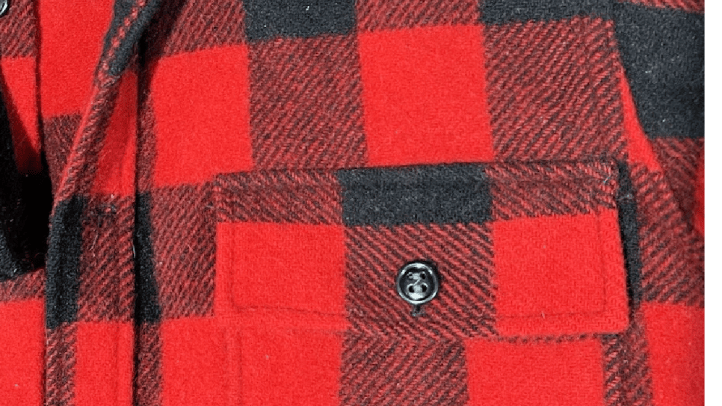
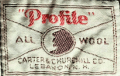
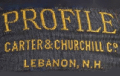
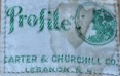
Profile, also known as Profile Garment(s), was a brand label of the renowned Carter & Churchill Company from Lebanon, New Hampshire. The brand carried premium quality wool apparel for outdoorsman and winter sports enthusiasts. Carter & Churchill Co. first registered the “Profile” brand trademark in 1916 but had been producing clothes under the label for much longer, perhaps even as far back as 1880.
— THIS BRAND IS NO LONGER IN PRODUCTION —
ABOUT
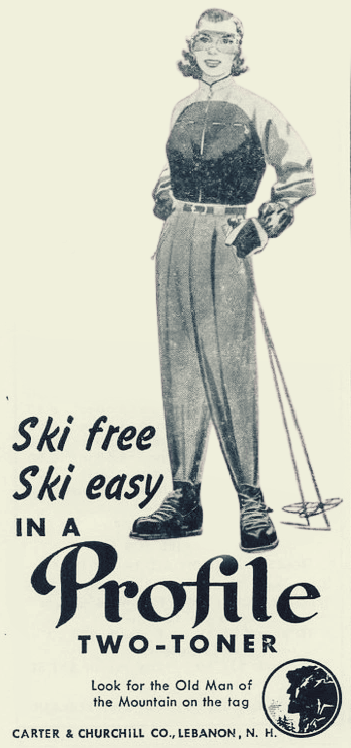
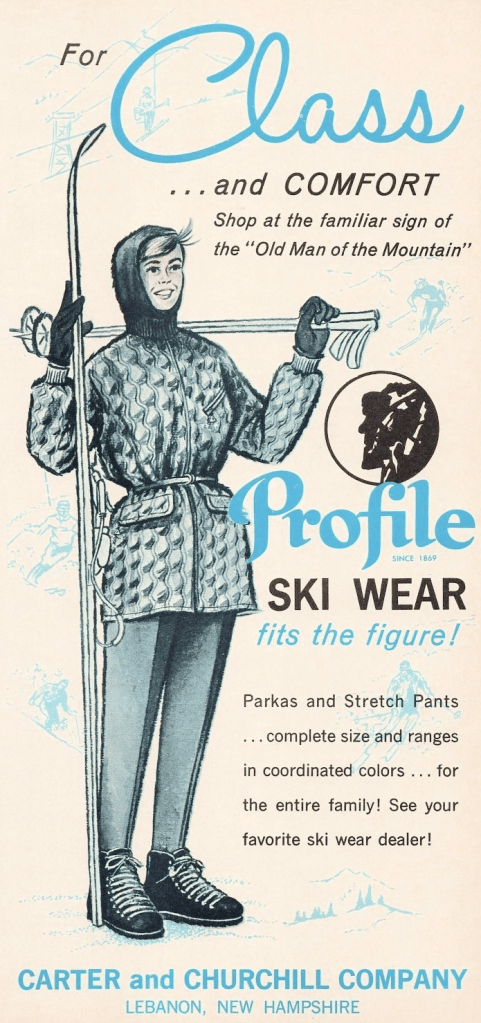
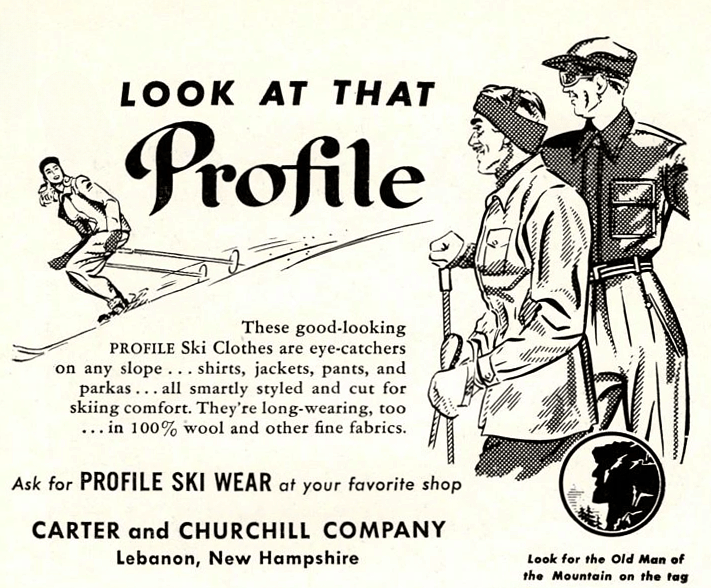
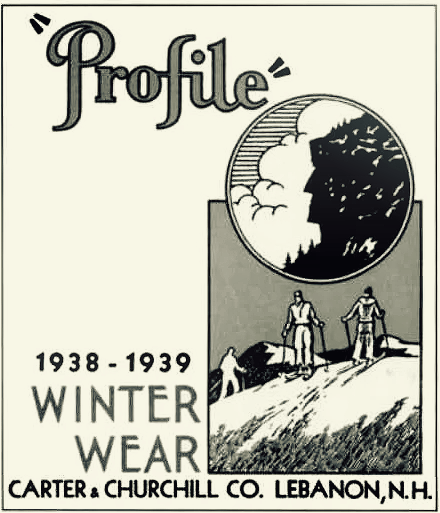
The Profile brand was a production label for the Carter & Churchill Co. who also manufactured under other brands including Lebanon Overalls. Envisioning an outdoors-oriented sportswear brand, they named it for a famous local rock formation which had come to be a state icon for New Hampshire: The Old Man of the Mountain (also known as Stone Face, the Great Stone Face, or, simply, The Profile). Profile was the common nickname for the formation, which resembled a human face, protruding from the granite cliff face of Cannon Mountain, a popular ski resort. The area in which the formation was located was known as Profile, as is the lake below.
The brand’s label would be affixed to a broad array of cold weather capable apparel and accessories to be produced under a new line for the Carter and Churchill Co., who leaned heavily on their New Hampshire origins to market their products. The Old Man of the Mountain was a significant cultural icon, associated with the mountain and winter sports activities of the area in which the natural phenomenon was located. Carter and Churchill would borrow this association and heritage as a perfect representation of their Profile line, a departure from the company’s traditional workwear offer.
The Carter name was well-known in New Hampshire. Henry Wood Carter of Concord was a travelling merchant who peddled his wares across the state and neighbouring regions in the mid-1800s. His trade focused on the sale of high-end homewares, jewellery and fashions, often imported from England, France and Germany. Trading from his Lebanon barn and using horse-drawn wagons, Carter would journey up and down the highways and trails of New England offering silverware, jewellery, timepieces, fabrics, hosiery, haberdashery, “fancies”, and “notions” to the most discerning Yankee, Brahmin and Knickerbocker families.
In 1859 he incorporated as H.W. Carter & Sons and established a factory in Lebanon which began producing apparel and workwear to cater to the growing industrial needs of the region. The Northern Railway had started constrution in 1844 and was fast expanding across New England, opening up new trade routes and the growth of forestry, timber mills, quarries and so forth. Workmen passing through Lebanon could acquire the gear and apparel required for their tasks from Carter who was fast gaining a reputation as a maker of excellent workwear and overalls, selling under the Carter’s brand and the Watch The Wear label.
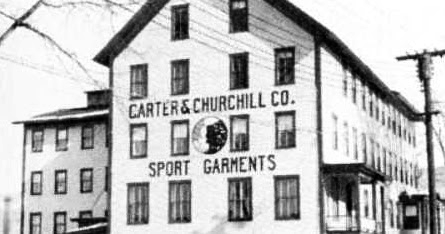
His nephew, William S. Carter, was in his employ until 1869 when he departed and founded a rival business with his partner, Frank C. Churchill. Churchill had also been in the employ of H.W. Carter & Sons where he worked as a salesman but had become disgruntled and joined with William to forge their own path. Carter & Churchill Co. would produce workwear using the knowledge and skills that both men had acquired at the older company. They too were headquartered in Lebanon.
The younger startup would produce overalls and related items primarily for the railroad market, introducing their Lebanon Overalls brand. In 1880 they began to sell hunting inspired outerwear under the Profile label: heavy shirts and flannels, mackinaw and boiled wool overcoats, field jackets and trousers, hunting caps and the railway-inspired Blizzard caps made famous by Elmer Fudd. These were often produced in the scarlet red colour known as “Red Stroud” or “Stroudwater Scarlet” which traces back to the red coats of the British Army and which were produced in the historic town of Stroud (pronounced “Stride”) in Gloucestershire. This colour was common to the point blankets made by companies like the Hudson Bay Company and Early’s of Witney and had long-been crafted into the capote coats used by frontiersmen and the métis people to keep warm in the harsh northern wilderness. Red was a preferred huntsman colour as it was understood that deer could not see reds and oranges and thus deerstalkers conceived a stealth advantage from wearing this colour, similar to the later popularity of blaze orange. Red Stroud and Buffalo Plaid were the preferred colours for North American hunting wear in the late 19th and early 20th Centuries for this reason. Carter and Churchill would favour these colorways for their Profile garments.
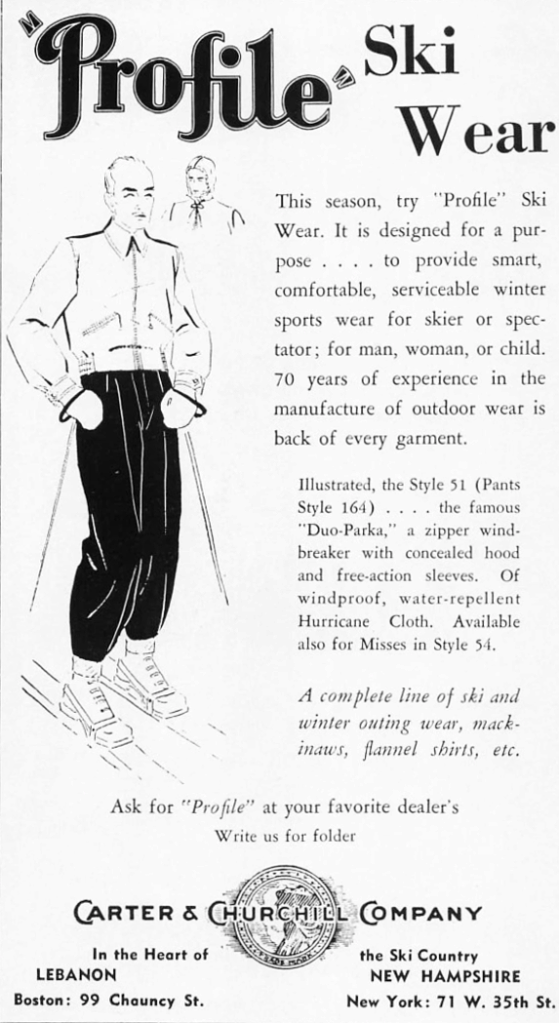
The high-quality products would keep any outdoorsman warm in the most brutal of winters. Thus, it was of no surprise, that apparel designed for hunters in the field would be co-opted for mountain sports, including skiing. As a local brand of great renown, Profile was particularly popular amongst New England and Mid-Atlantic skiers with their buffalo plaid mackinaw wool jackets and capote point blanket coats commonly spotted in the backwoods and on the slopes, with thick wool trousers to match. The Profile trademark was registered in 1916.
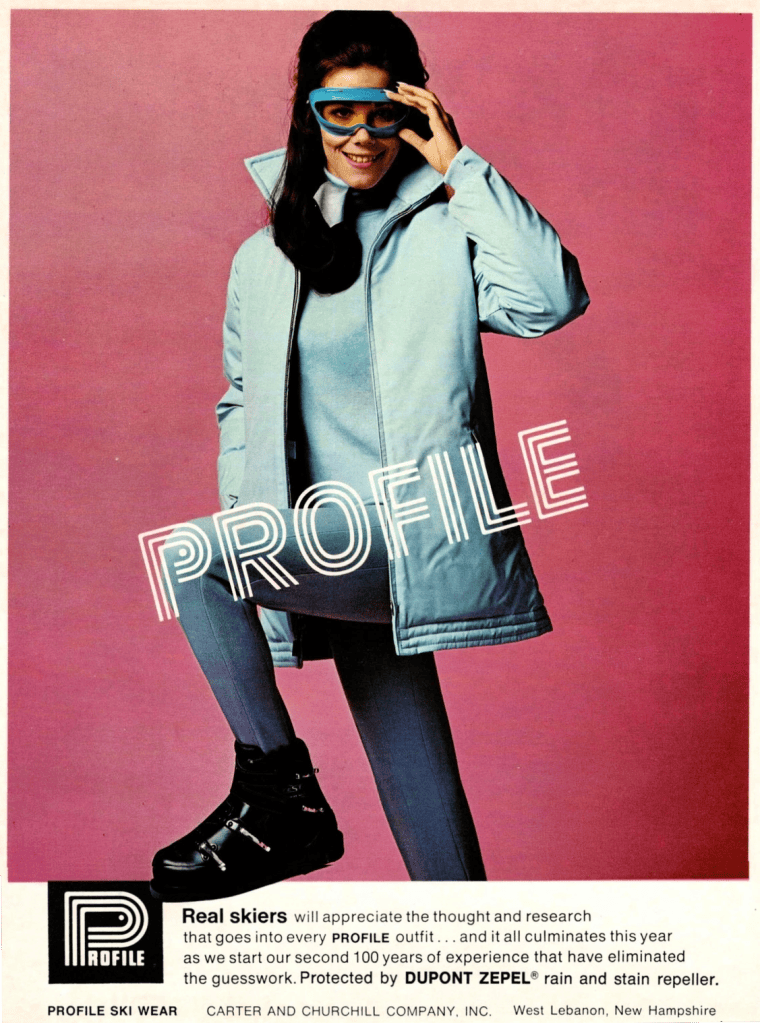
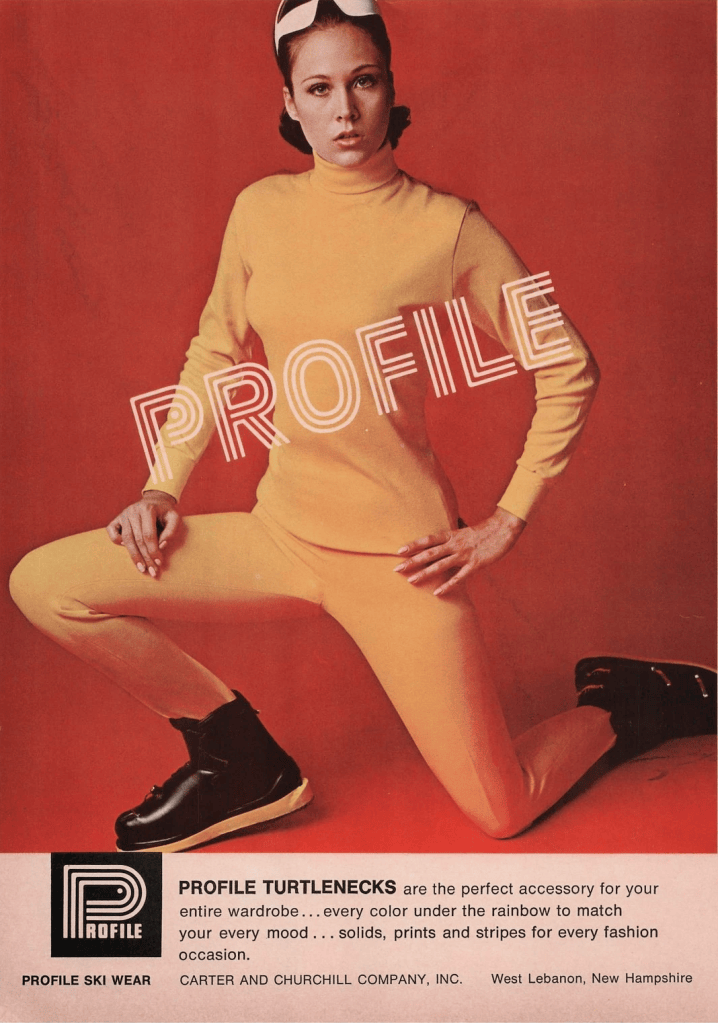
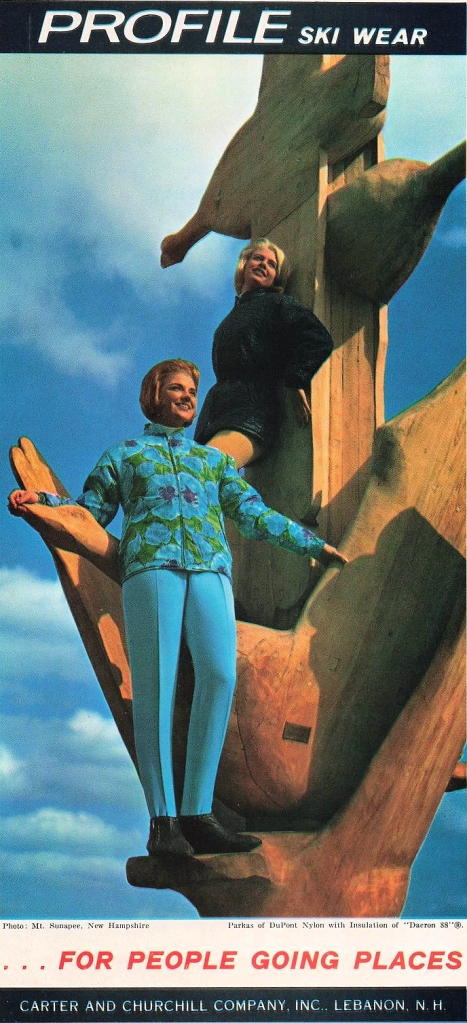
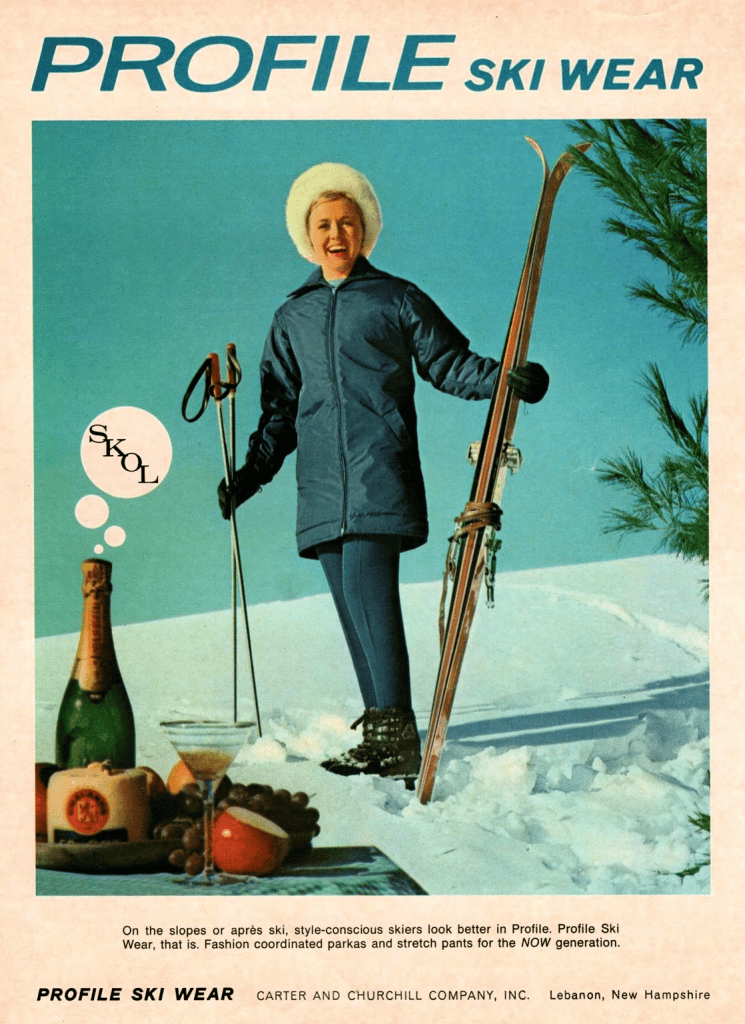
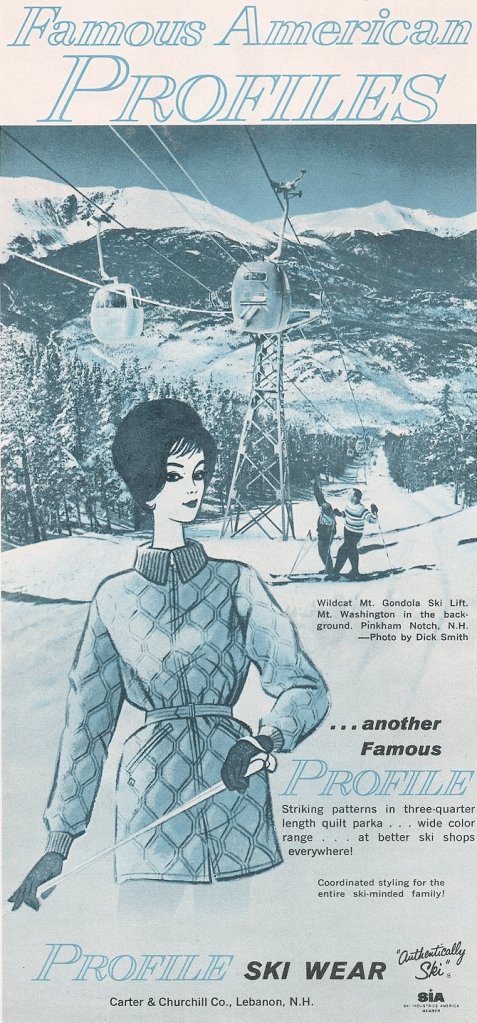
Skiwear became a significant market for the Profile brand and Carter and Churchill made the decision to realign exclusively as a snow and mountain outerwear brand, with the Profile brand becoming the company brand (often marketed as Profile Ski Wear). Embracing rapid developments in the textile industry, Profile would use synthetic performance fabrics to create waterproof, lightweight and unrestrictive ski coats, parkas and down jackets. The older H.W. Carter & Sons would continue to focus on workwear.
The Carter family exited the various Carter businesses in the 1960s (H.W. Carter & Sons was sold in 1967 and closed down in 1985 after production had been relocated under the new owners). The Profile brand would continue until the 1990s, when it would be discontinued. Sadly, the Old Man of the Mountain rock formation from which the brand took its name, crumbled away in 2023.
Nonetheless, the brand is highly sought out amongst collectors of vintage Americana and heritage workwear and apparel. Pieces regularly pop up for sale in thrift stores and vintage haberdasheries in North American and Japan and, occasionally, online. Older wool pieces from the hunting-era Profile have lasted well and can often be found through online auction and pre-owned retail sites (ebay.com and etsy.com, as always, are your best bet and you can have a look using the affiliate links provided). The synthetic skiwear of the later years has not lasted as well (standard for synthetic), so less pieces tend to be found. The odd piece that comes up is highly sought after by afficionados of the 1980s preppy aesthetic.
If you know more about the history of this brand that you can tell us, we would love to hear from you in the comments, or point us to any similar makers.
PURCHASE





*contains affiliate links to amazon.com, ebay.com and etsy.com. Other affiliate links may be included.
INFORMATION
Brand:
Profile
Established:
1880
Origin:
American
Category:
Heritage Brand
Parent:
Carter & Churchill Co.



GALLERY
CONTACT
Address:
15 Parkhurst Street, Lebanon, NH 03766, United States
Telephone:
–
Email:
–
Website:
–
Social:
FURTHER READING
PROFILE
SINCE 1880
AMERICAN
HERITAGE BRAND
PROFILE
PROFILE BY CARTER & CHURCHILL CO. | PROFILE GARMENTS | PROFILE SKI WEAR
— THIS BRAND IS NO LONGER IN PRODUCTION —
Profile, also known as Profile Garment(s), was a brand label of the renowned Carter & Churchill Company from Lebanon, New Hampshire. The brand carried premium quality wool apparel for outdoorsman and winter sports enthusiasts. Carter & Churchill Co. first registered the “Profile” brand trademark in 1916 but had been producing clothes under the label for much longer, perhaps even as far back as 1880.
ACCESSORIES | APPAREL | CABINWEAR | COUNTRYWEAR | FIELDWEAR | HUNTING WEAR | MOUNTAINWEAR | OUTERWEAR | SPORTSWEAR | SKIWEAR

